Vulnerably sharing with you today! Eek!
Get some tea and settle in, it’s a long one…
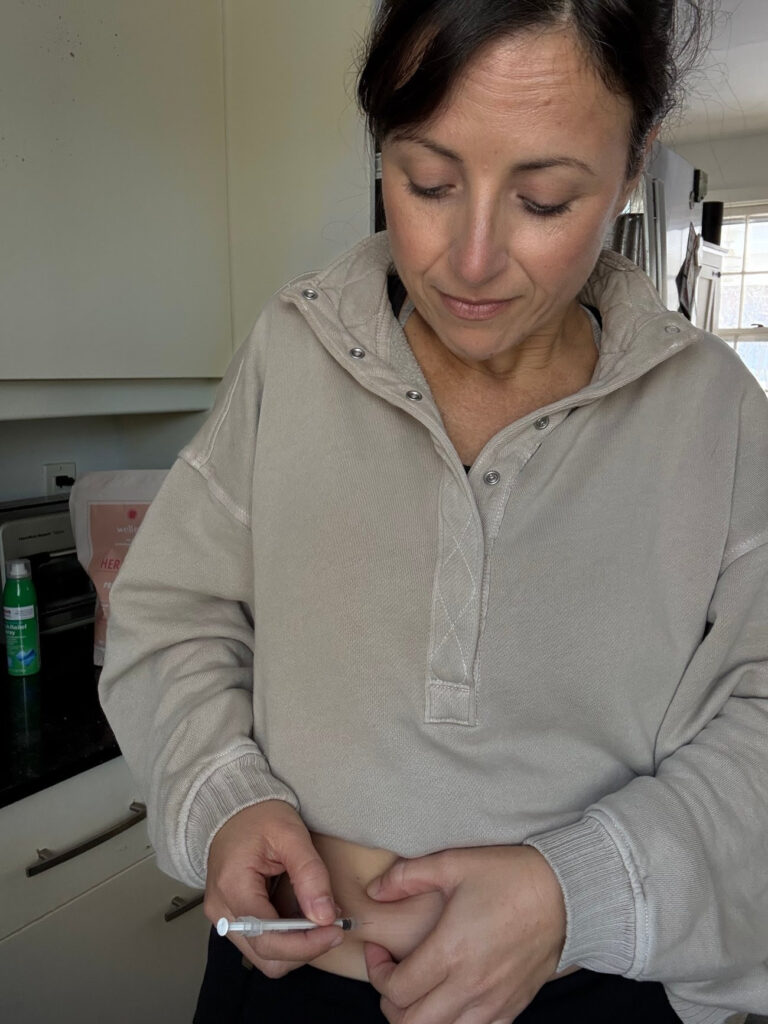
My personal experience with low-dose semaglutide (GLP-1) in Perimenopause, and why I think this conversation needs way more nuance:
Okay, so over the last couple of years (as I moved deeper into my mid-40s) I started noticing something that so many women tell me about but hardly anyone talks about honestly:
My appetite changed.
Not in a “I’m a little snacky” kind of way…
In a “why do I feel hungry all the time?” kind of way. 🤪
And while we love to say these things “come out of nowhere,” in reality I could feel the shift happening:
- My cravings especially for sugar and carbs went way up
- My luteal phase hunger became intense and distracting
- I felt like my “food noise” volume knob got turned up to a 10
- My once-predictable appetite cues felt unreliable
- And I could tell my blood sugar wasn’t as steady as it used to be
Nothing “dramatic” happened.
It was just this slow, subtle unraveling of metabolic resilience that so many women experience in perimenopause.
I worked with a practitioner:
We optimized my hormones with bioidentical HRT (alongside all of the foundational food & lifestyle things I had already integrated – CAN’T skip this part folks!)
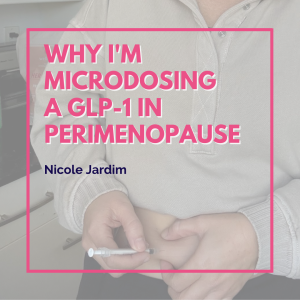
AND I decided to try a very low dose of semaglutide (a GLP-1 agonist)
When I say “low dose,” I mean low:
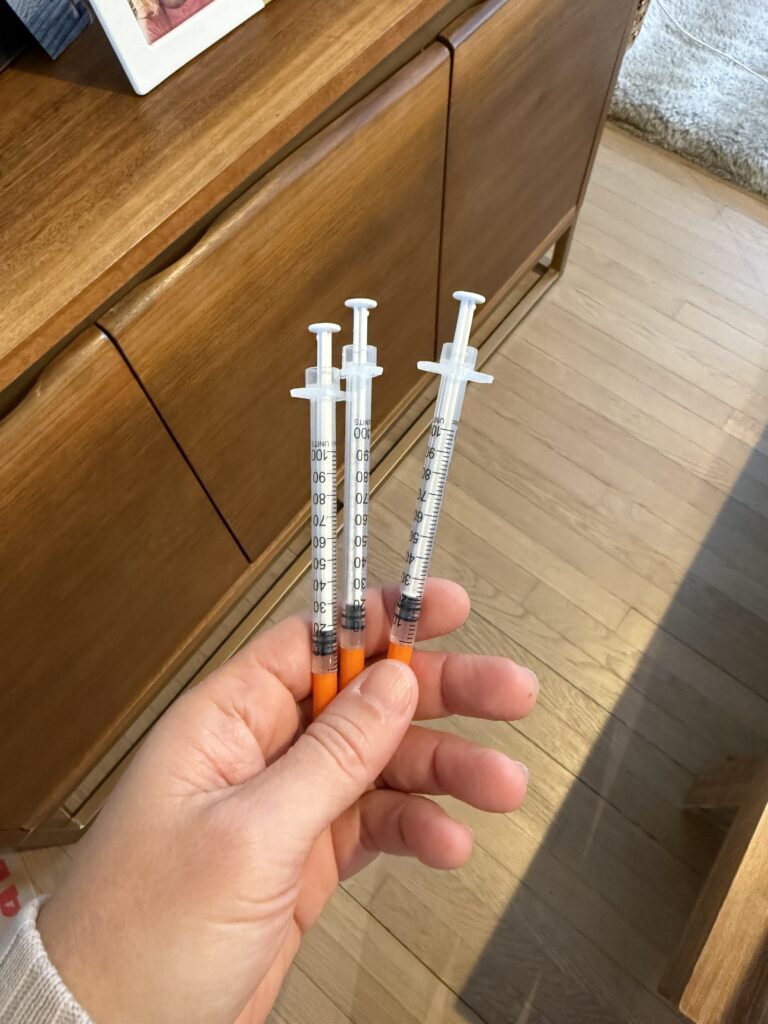
I started at 50 mcg
I am now at 100 mcg
For context: pharmaceutical semaglutide (like Ozempic/Wegovy) typically starts around 0.25 mg–0.5 mg (250-500 mcg) and goes up to 2.4 mg. So I’m using a tiny fraction of the standard range.
What got me here (perimenopause perimenopaus-ing)
As estrogen and progesterone fluctuate, and then begin their gradual decline, several metabolic changes occur:
Insulin becomes less efficient
Estrogen is insulin-sensitizing. As levels become inconsistent or begin to drop, your cells don’t respond to insulin as effectively. Result?
- Bigger blood sugar swings
- More reactive hypoglycemia
- Sugar + carb cravings
- Feeling hungry again shortly after meals
Ghrelin (your hunger hormone) becomes more unpredictable
Some women suddenly experience:
- Constant hunger
- Stronger appetite in the luteal phase
- Emotional eating tendencies
- Difficulty feeling “satisfied”
Cortisol becomes more reactive
Perimenopause is a time of reduced stress resilience, and cortisol + blood sugar are dance partners.
When your stress response is elevated or erratic, appetite often follows suit.
Gut changes occur
Progesterone + estrogen fluctuations affect motility, microbiome stability, and satiety signals. Many women notice:
- Bloating
- Slower digestion
- Feeling like food “sits” differently
- Appetite dysregulation tied to gut discomfort
All of this creates the perfect storm for increased cravings and weight gain, even when nothing about your habits has changed.
What low-dose semaglutide has done for me
Using a tiny dose of semaglutide has not been some magic weight-loss trick. That’s not what I wanted or what I’ve experienced.
What it has been is a nervous system + metabolic stabilizer.
Here’s how I’d describe it:
It dramatically quieted the “food noise”…
The constant mental chatter of what can I eat next? Why am I still hungry? Why do I want sugar again?
…just dialed way, way down.
My appetite feels appropriate again.
Not suppressed or gone!
Just calm, steady, and predictable.
My luteal phase hunger no longer feels like a tidal wave. 🌊
The “I could eat the entire fridge” luteal phase has softened into something much more manageable and normal.
My cravings decreased. Especially those late-afternoon and nighttime carb cravings that became so much louder in my mid-40s.
I feel more conscientious, but not restrictive, with food
This is an important nuance with GLP-1’s.
I didn’t feel “out of control” before, but I felt pushed toward foods that I knew weren’t serving me. Now I feel like I’m back in the driver’s seat.
My weight didn’t dramatically change, just stabilized / stopped creeping upward.
My gut feels more settled – a lot less bloating and a flatter stomach that I hadn’t had in awhile!
Why I think this matters for women in their 40s
There is SO much fear-mongering around GLP-1s, and also SO many irresponsible uses of them.
Also, I know what you’re thinking, “but Nicole, this isn’t natural.”
And to that I say – I think what’s often missing in the wellness space, is the space for nuance and for balance.
I’ve always talked about the 80/20 rule (and I know you’ve heard about this one too). You don’t have to be 100% holistic / au natural or 100% western medicine.
I’ve never been all or nothing (I’m so thankful for emergency care especially – like when I had appendicitis a few years ago!)
What’s missing is the middle space – the nuanced, hormone-informed conversation for women who are experiencing legitimate metabolic changes due to perimenopause. 💕
For many of us, the issue isn’t willpower.
It’s not discipline.
It’s not lack of knowledge (or protein, or strength training, or nervous system regulation).
It’s the loss of estrogen, progesterone, and metabolic stability. And it’s all NEW and ever-changing.
I’m certainly not telling you to run out the door and get on this stuff. It’s a highly personal choice and you should work with a trained practitioner. I just wanted to share openly and honestly with you.
For me, this has felt like giving my metabolism a soft place to land while my hormones do their midlife rollercoaster dance. 😬
Final thoughts…Where do you get these peptides?
Naturally, everyone wants to know where you can get GLP-1’s. I am working with my friend and colleague Emily Sadri. Her practice entirely caters to mid-life women, and as part of her offerings she provides HRT and peptides to support women’s health.
There are a fair amount of providers out there who do this too, so I recommend searching for doctors who include peptides as part of their services. Make sure you read reviews and ask questions! Or better yet, get referrals from people you know who are having great results.
It’s so so important to find a skilled provider who knows their stuff and truly understands how to use peptides safely and effectively. They should also have a solid understanding of holistic health, nutrition, etc.
My friend Dr. Tyna has also been super helpful to me. Her podcast has a ton of information on low dose peptides.
For my international ladies outside of the US – unfortunately, I don’t have any information on how or where you can get peptides. So sorry!
Hit me up with your questions over on Instagram and I’ll do my best to answer them!
Interested in foundational cycle & hormone support and not sure where to start? The Fix Your Period Collective has you covered, and your first step is the Period Quiz.