If you’re in perimenopause, your period might be acting… differently.
These changes can be unsettling, but they’re not random. Your hormones are shifting in real time.
Let’s get into 3 common scenarios I see happening.

Scenario 1: Periods get heavier and cycles shorten
Overview:
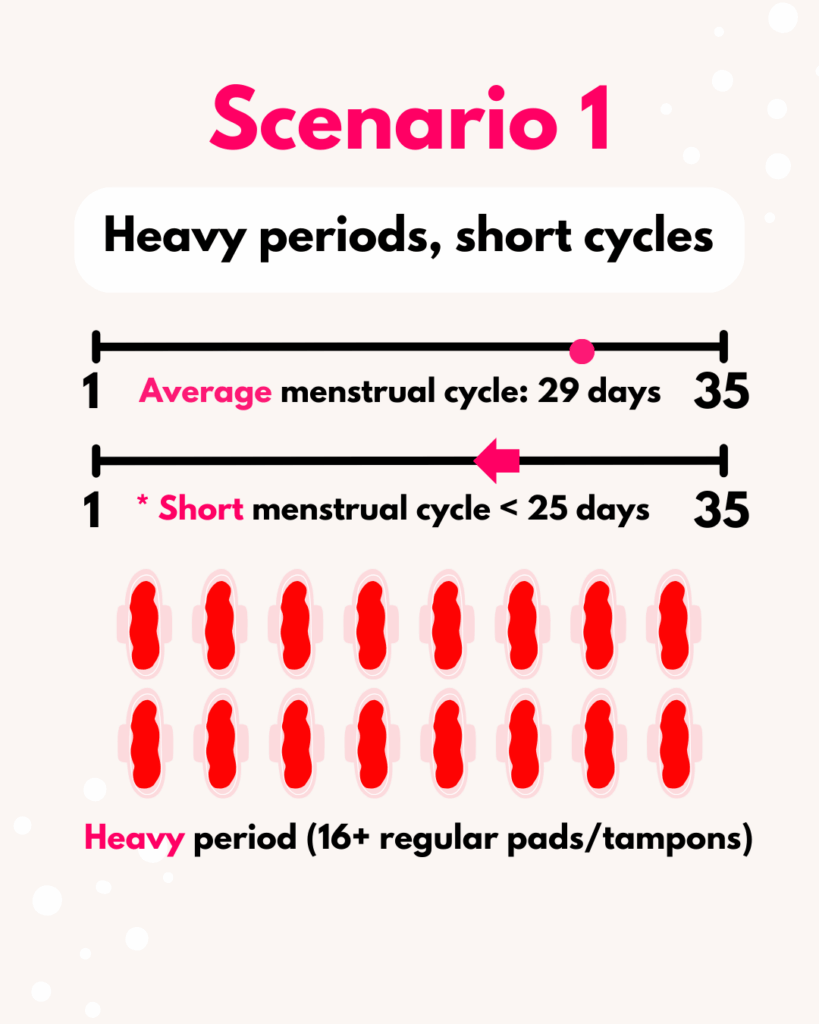
In early perimenopause, estrogen starts rising and falling more erratically. Sometimes your ovaries mature multiple follicles at once, leading to a thicker uterine lining and more frequent ovulation. This can shorten your cycle to 21–25 days and cause heavier bleeds. It can feel exhausting, but it’s your body responding to shifting hormone patterns – not “failing” you.
Here’s what’s happening physiologically:
- Higher FSH: As your ovaries become less sensitive to follicle-stimulating hormone (FSH), your body produces more of it.
- Multiple follicle recruitment: Higher FSH can stimulate more than one follicle to mature in the same cycle.
- Higher estrogen output: Multiple follicles produce more estrogen early in the cycle.
- Thicker uterine lining: This extra estrogen stimulation builds a thicker endometrium.
- Shorter follicular phases: Ovulation can happen sooner, shortening cycles to less than 25 days long.
- Shorter luteal phases: The follicle isn’t as healthy or robust as it used to be, which can lead to lower progesterone production, and shorter luteal phases. This is also a contributor to shortened cycle lengths.
High estrogen spikes paired with shorter follicular phases are a well-documented driver of heavier bleeding in early perimenopause, as described in research by Jerilynn Prior and others who study perimenopausal ovulation patterns.
Why it’s not bad news:
This is your body adapting to hormonal changes – it’s not a sign of dysfunction. Understanding the hormonal drivers behind these changes can help you make targeted adjustments to manage symptoms and protect your energy.
Important to note:
- Not everyone will experience this – some women have heavy, short cycles for only a year or two.
- “Multiple follicles” usually means simultaneous recruitment, not multiple ovulations (though rare double ovulation can occur).
- Low progesterone from weak or missed ovulation can worsen heavy bleeding, as unopposed estrogen continues to build the lining.
Scenario 2: Periods lighten and get shorter

Overview:
Lower progesterone and a gradual decline in estrogen can mean less uterine lining builds before your period. Your bleed may be lighter and last fewer days, even if your cycles still arrive on time. This scenario generally occurs mid-late perimenopause, but it can happen at any time (I personally saw this pattern early on).
Here’s what’s happening physiologically:
- Lower progesterone: Weaker or absent ovulation means less progesterone in the luteal phase. Since progesterone helps stabilize and prepare the uterine lining, less of it results in less lining to shed.
- Gradual estrogen decline: As ovarian reserve decreases, estrogen trends lower overall (though it can still spike unpredictably earlier in perimenopause). Less estrogen means slower lining growth.
- Result: A thinner endometrium by the time your period arrives, leading to lighter bleeding that may last only 1–3 days.
Why it’s not “bad” news:
This is a normal hormonal shift. For some, lighter bleeds can feel like a welcome change during perimenopause, especially after years of heavier cycles.
Possible variations:
- Shorter bleeds with a normal cycle length
- Shorter bleeds paired with longer cycles if ovulation is delayed
Scenario 3: Cycles get longer and more unpredictable
Overview:
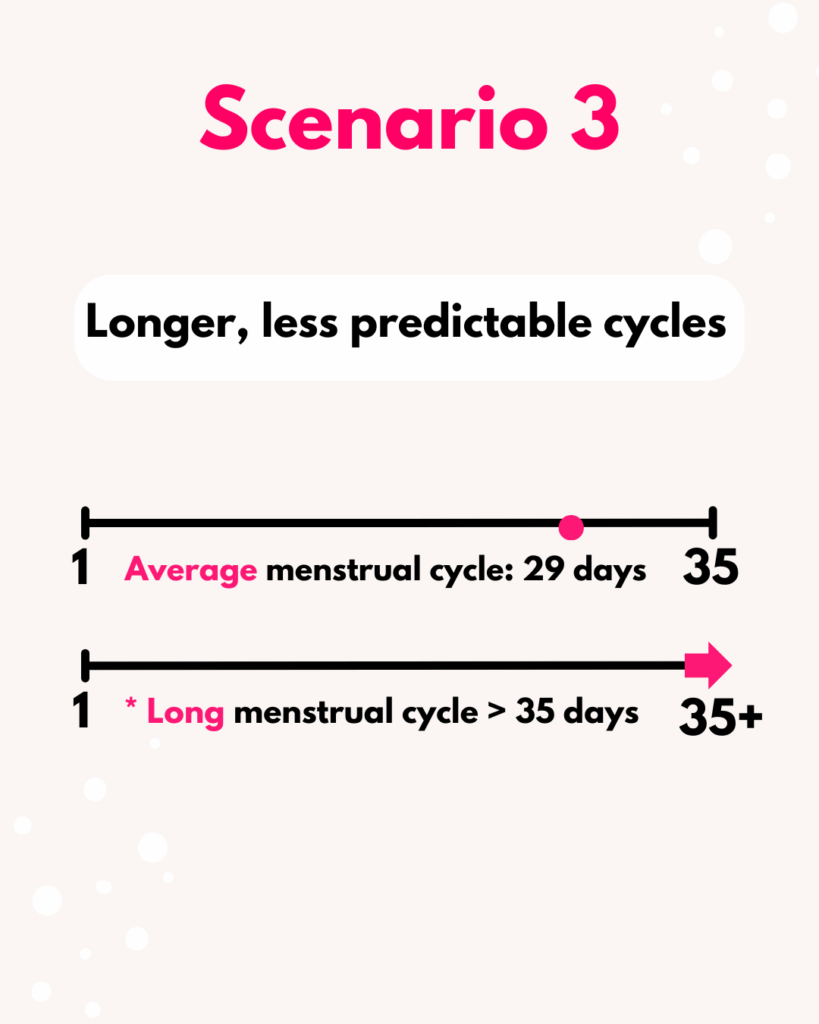
In mid-to-late perimenopause, ovulation may take longer to happen, or skip altogether. When this occurs, your cycle can stretch past 35 days and the timing of your period may feel unpredictable. While it’s often more common later in the transition, many women experience occasional long cycles earlier in perimenopause too.
Here’s what’s happening physiologically:
- Delayed ovulation: Instead of releasing an egg around day 14, it might not happen until day 20, 25, or later.
- Anovulatory cycles: In some cycles, ovulation doesn’t occur at all, meaning no corpus luteum is formed and no significant progesterone is produced.
- Longer cycle lengths: Late ovulation pushes the entire cycle longer; no ovulation at all can result in very delayed or unpredictable bleeding.
Why it feels erratic:
Without regular ovulation, hormone signals become less coordinated, so both timing and flow can vary from month to month. You might have a 28-day cycle one month and a 50-day cycle the next – both are part of the natural transition toward menopause.
Why it’s not “wrong”:
These shifts reflect your body’s gradual winding down of reproductive hormone production. They’re a normal part of the perimenopause journey, not a sign you’ve “broken” your cycle.
The takeaway:
Perimenopause can bring big changes to your period, but each shift has a hormonal explanation. Understanding the why is the first step to knowing how to work with your body—not against it.
If you’re ready to decode your unique cycle changes and get a personalized plan for supporting your hormones, take the Period Quiz today.