Most of us are intimately familiar with premenstrual syndrome (PMS). In fact, over 90% of women report that they experience some premenstrual symptoms, which is honestly wild when you stop and think about it.
But a smaller (and often very confused) group of women experience something different: PMS-like symptoms that show up after their period ends.
Mood crashes. Anxiety. Brain fog. Complete exhaustion. Feeling cold. Vaginal dryness. Digestive chaos. Rage-y tears for no apparent reason.
This is often referred to as postmenstrual syndrome – and while it’s not a formal medical diagnosis (yet), that doesn’t make it imaginary, rare, or “in your head.”
Let’s get one thing straight right away:
👉 Just because something is common does not mean it’s biologically normal.
Your period is not supposed to wreck you before or after it arrives.
And yes, a life where your period quietly comes and goes without drama is absolutely possible.
What Is Postmenstrual Syndrome?
Postmenstrual syndrome describes a cluster of physical, emotional, and cognitive symptoms that show up in the days (or even weeks) immediately after menstruation ends.
It looks a lot like PMS – just poorly timed.
Instead of feeling off in the luteal phase, women with postmenstrual symptoms often feel worst during:
- Late menstruation
- Early follicular phase
- Or the 3-7 days after bleeding stops
And unfortunately, many of these women also experience PMS and/or PMDD, which makes the whole cycle feel like one long hormonal obstacle course. Cool cool cool.
Common Postmenstrual Symptoms I see (A Lot)
Emotional & Cognitive
- Anxiety (sometimes intense or sudden)
- Low mood or depressive feelings
- Irritability, impatience, or emotional reactivity
- Anger or rage that feels… disproportionate
- Crying easily or feeling emotionally raw
- Brain fog, poor focus, feeling “not like yourself”
- Exhaustion that no amount of caffeine seems to be able to fix
Physical
- Vaginal dryness, burning, or itching
- Pain during sex
- Feeling cold or unable to warm up
- Headaches or migraines
- Joint, neck, or low back pain
- Digestive issues (especially diarrhea)
- Fatigue that doesn’t match your sleep
- Pelvic pain that feels like cramps with no period
If you’re nodding along thinking “why does no one talk about this?” I see you. You’re not broken, dramatic, or failing in life.
Why You Feel Worse After Your Period? (Hint: It’s Not Just “Hormones”)
This is where we often miss the mark. Yes, sex hormones matter, but they are not the starting point.
Hormones don’t exist in a vacuum. They respond to the terrain of your body.
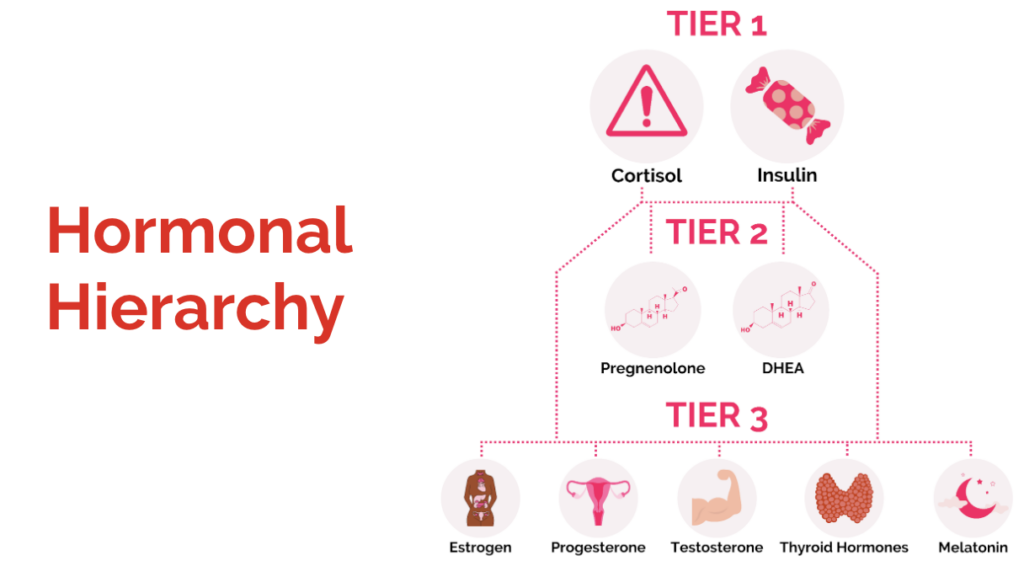
If we zoom out and look through a Hormonal Hierarchy lens, postmenstrual symptoms are usually driven by upstream imbalances that finally become noticeable once your body is depleted from menstruation.
Let’s break it down.
The Real Root Causes of Postmenstrual Syndrome
1. Blood Sugar Dysregulation (The Silent Instigator)
If I had to pick one place to start almost every hormone conversation, it would be here.
So many of us consume a diet high in refined carbohydrates and sugars — toast for breakfast, a sandwich for lunch, pasta for dinner, then dessert – which all create an environment within our bodies ripe for blood sugar and insulin dysregulation.
Blood sugar instability and insulin resistance:
- Increase inflammation
- Disrupt ovulation
- Mess with your gut function
- Impair estrogen metabolism
- Stress your nervous system
- Deplete nutrients faster
And here’s the kicker: Menstruation is already a metabolically demanding event.
If your blood sugar is shaky going into your period, the days after can feel like a full-body crash.
Common signs this is at play:
- Anxiety or shakiness before eating
- Brain fog between meals
- Intense carb or sugar cravings
- Mood swings that feel “chemical”
This is why your symptoms don’t magically stop once bleeding does.
2. Stress Physiology & Nervous System Load
Chronic stress doesn’t just make you tired, it reprograms how your body handles glucose, hormones, and inflammation.
Elevated or dysregulated cortisol can:
- Mess with your blood sugar
- Disrupt ovulation and production of estrogen, testosterone and progesterone
- Interfere with estrogen detoxification
- Keep your nervous system stuck in high alert
So if you’re living in survival mode (hello modern life), the drop in hormones at menstruation can feel especially destabilizing, and even harder to recover from once your period is over.
3. Inflammation + Poor Recovery After Your Period
Inflammation – whether driven by food reactions, gut issues, chronic stress, or immune activation – makes it much harder for your body to bounce back after your period.
After menstruation, your body is supposed to shift gears:
- Your ovaries begin ramping up estrogen production
- Energy slowly returns
- Your mood starts to shift
- That “get up and go” feeling starts to come back online
But when inflammation is high, that recovery process stalls.
Instead, inflammation can:
- Blunt ovarian function, making it harder for estrogen to rise smoothly
- Worsen histamine activity, which can trigger anxiety, irritability, headaches, and brain fog
- Drain resilience, leaving you feeling flat, sluggish, unmotivated, or emotionally fragile
- Increase nervous system sensitivity, so everything feels harder, heavier, and more overwhelming than it should
Rather than feeling renewed a few days after your period ends, you’re left feeling like your body never quite got the memo that it’s time to move forward.
4. Blood Loss & Nutrient Depletion
Menstruation means you lose blood, and with blood comes iron, which is essential for carrying oxygen, making energy, and keeping your brain and muscles working well.
If you’re already running low on iron, your body feels it afterward.
Since your body doesn’t hang onto large iron stores, monthly blood loss can gradually reduce your iron stores over time, especially if you’re not eating enough iron-rich foods or if your flow is heavy.
This is one of the most well-studied nutrient impacts of menstruation and is a major reason why iron deficiency – with symptoms like fatigue, low mood, poor stamina, feeling cold, and headaches – is far more common in menstruating women.
In fact there is research that found low ferritin (how iron is stored in the body) caused by blood loss, triggers migraines and headaches at the tail end of the cycle, so there is some evidence that iron problems could be behind post-menstrual syndrome.
While research on losses of other vitamins in menstrual blood is limited, chronic blood loss combined with inflammation, stress, and insufficient nutrient intake can make it harder to maintain adequate levels of key nutrients overall.
That’s why supporting your body with balanced nutrition, especially iron-rich foods, vitamin C (to help iron absorption), B vitamins, and antioxidants, is so important for feeling your best throughout your cycle.
FYI: This is one of the most overlooked contributors to postmenstrual symptoms, especially in women who are told their labs are “normal.”
5. Yes, Sex Hormones Still Matter (Just Not First)
After your period ends, estrogen, progesterone, and testosterone are all at their lowest point in the cycle.
In addition to regulating the reproductive system, these hormones also heavily influence chemicals in the brain, including serotonin, dopamine, GABA and oxytocin, which all affect multiple aspects of your health.
That can absolutely contribute to:
- Down-in-the-dumps moods
- Feeling depleted
- Vaginal dryness
- Decreased libido
- Sluggishness to the point that everything feels hard
But here’s the key distinction:
👉 Low hormones aren’t the problem. Poor resilience to hormonal shifts is.
When your blood sugar, nervous system, gut, and nutrient status are supported, these natural hormonal lows don’t feel catastrophic.
So… What Actually Helps?
No, you don’t need to “balance your hormones” in isolation.
You need to:
- Stabilize your blood sugar
- Reduce your inflammatory load
- Support your unique stress physiology
- Replenish key nutrients
- Then support hormone function
This is the Hormonal Hierarchy, and it’s exactly how we approach cycle issues inside my work.
Your Next Steps (No Overwhelm Required)
If you’re dealing with PMS, postmenstrual symptoms, irregular cycles, or mood changes you can’t explain, start here:
🩸 Take the Period Quiz
It’ll help you understand which systems are driving your symptoms, and what to focus on first.
🩸 Join the Fix Your Period Collective
This is where we take everything you’re learning and actually apply it – with education, tools, and support that meet you where you are.
You’re Not Imagining This
If you’ve landed here feeling frustrated because your symptoms are real but poorly explained – welcome! You deserve to understand your body without needing a medical degree or being told “it’s just hormones.”
With the right education and support, your cycle can stop being something you brace for, and start being something you trust.
And that? That’s the goal.

5 thoughts on “Postmenstrual Syndrome: When PMS Hits After Your Period”
You’re right. It is a new kid on the block. Never have I heard or had this before.
I can’t help but feel there are external factors causing this, especially if it’s only being recognised now.
I had no PMS this month. I felt amazing. But since my period stopped, I’ve been a total mess and can’t see things improving.
Can you please send me more info on how to stop all this awhen my period comes to a end it’s awful I have it please help many thanks I need to balance hormones without medication
My doktor Said that there is no evidence and therefore my strory was invalide and he told me “you ned to talk to “simeone” and gave me a number for a psykologist 😮💨🤯🥵😢🤿
This describes me to the “T”. Can you send me more information on how to balance my hormones.
This describes me to the “T”. Can you send me more information on how to balance my hormones.