Working against your natural cycle results in frustration and burnout. Once you start to tune in to the nuances of the four phases of your cycle, begin noticing your body’s messages, and work with your innate female wisdom, you’ll see profound shifts in your health, relationships and life.
For example, during your cycle’s less active phases, you’ll know to honor your body’s need for rest and relaxation. During your cycle’s more active phases, you can take advantage of your increased energy to get more done.
To do this, begin to pay attention to your symptoms during each phase—how you feel physically and emotionally. Notice what feels off or not right.
When you start to understand these shifts, it becomes easier to support yourself – and to communicate what you need in your relationships (so your partner, or family, can learn to proactively support you) – without guilt or confusion!
Think of this as a cycle-synced guide to honoring your needs. Share this with your partner! 💌
Phase 1: The Bleeding Phase (Menstruation)
Winter • New Moon 🌑
Themes: rest and relaxation, quiet time, shedding, trust, intuition
This phase is characterized by a decline in estrogen and progesterone, which explains why many women feel fatigued, withdrawn, and introspective. Symptoms like bloating, cramping, lower-back pain, headaches, or migraines are often your body’s way of asking you to slow down, or stop altogether.
This is a time to focus on nurturing yourself, and accepting support.
Food
Your focus during this phase should be on replacing the minerals (especially iron) lost during bleeding, decreasing inflammation (menstruation is an inflammatory process), and supporting energy levels with adequate B12.
Red meat, salmon, sardines, and bone broth with scallions, seaweed, and mushrooms help replenish iron, zinc, and other key minerals. Antioxidant-rich fruits and vegetables like berries and leafy greens reduce inflammation, while vitamin C-rich foods support iron absorption.
Warm, comforting meals–chilis, soups, stews, or stir-fries with turmeric, cayenne, or cinnamon–encourage circulation and reduce inflammation. Hydration is crucial, especially if diarrhea is present, so prioritize water-rich foods like cucumbers, celery, watermelon, and cantaloupe. Sugar, cold smoothies, and ice water may worsen cramps and mood swings, so it’s best to avoid them during this phase.
This is a great time to have your partner, family or roommate do the cooking! Especially day one and two of your cycle. 🩸
Lifestyle and Career
This is the winter of your cycle, and it’s time to slow down. Your period is your body’s built-in pause button (though many of us have been conditioned to ignore it.)
Clear your calendar of big social commitments, intense work demands, or dating when possible. Instead, prioritize emotional well-being: journaling, watching shows you love, engaging in hobbies, or simply resting. This is also an ideal time to reflect, set intentions, and notice what in your life needs attention.
Retail therapy may offer a temporary mood boost 😂, but restorative activities are far more effective at replenishing energy.
Exercise
Gentle movement is best during menstruation especially if your period is painful or challenging. Walking, stretching, yoga, and Pilates support circulation without placing additional stress on the body. Unless you’re required to train or compete, it might be best to avoid high-intensity workouts like CrossFit, spinning, boot camps, or long runs during this phase. However, if you feel amazing on your period and want to work out, then you absolutely should!
Sex
Desire during menstruation varies widely, and all of it is A-okay! Some women feel less interested in sex, while others experience increased desire due to pelvic blood flow or a slight rise in testosterone.
Physical touch and orgasms increase oxytocin, the hormone of bonding, which can also reduce pain. Intimacy doesn’t need to be penetrative—gentle touch, cuddling, or kissing can be just as beneficial.
If penetrative sex feels good, use plenty of lubrication. Menstrual blood raises vaginal pH, which–combined with lower estrogen–can increase susceptibility to infections, so you might want to have your partner ejaculate outside the vagina.
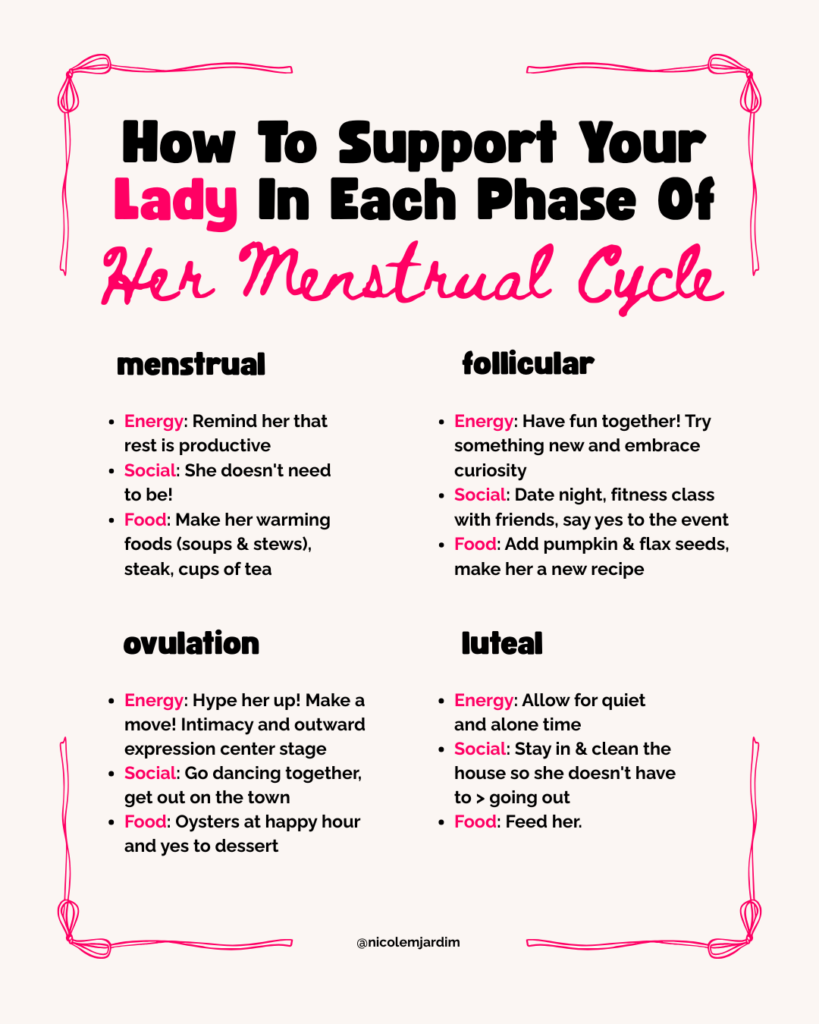
Phase 2: The Follicular Phase
Spring • Waxing Moon 🌔
Themes: renewal, creativity, new beginnings, connection
This is the non-bleeding part of the follicular phase, when estrogen and testosterone begin to rise. Energy, mood, confidence, and cognitive function improve. You may feel more outgoing, optimistic, and willing to take risks.
This is a powerful phase for growth and momentum.
Food
Rising estrogen increases insulin sensitivity and may suppress appetite early in this phase. Light, fresh foods often feel best: salads with arugula or baby kale, lean protein, and colorful vegetables. Healthy fats—avocado, olive oil, butter, nuts, pumpkin seeds, and flax—support estrogen production.
As ovulation approaches, appetite typically increases. Add complex carbohydrates like sweet potatoes, squash, and whole grains to support the energy demands of ovulation. Fermented foods such as sauerkraut, kimchi, or coconut kefir support digestion and help reduce bloating.
This may be a fun time to experiment with new recipes or go out to eat with your partner or friends.
Lifestyle and Career
Spring is a time of renewal. Brainstorming, creativity, problem-solving, and decision-making are strong during this phase. Start new projects, take on challenges, and speak up in meetings.
Social connection tends to feel easy and enjoyable, making this a great time to network, schedule time with friends, explore new opportunities and go on date-night. Just be mindful not to overcommit. You’re flying high in this phase and burnout can still happen if you say yes to everything. 🪁
Exercise
As estrogen and testosterone rise, strength and endurance improve. This is an ideal time for more demanding workouts, including strength training, HIIT, and trying new forms of movement. Muscle builds and repairs more efficiently during this phase.
Sex
You guessed it: this phase is a great time to try new positions, toys, and locations. Earlier in the follicular phase might be a drier time of the month, especially right after your period. So, make time for foreplay and use lots of lube, if necessary.
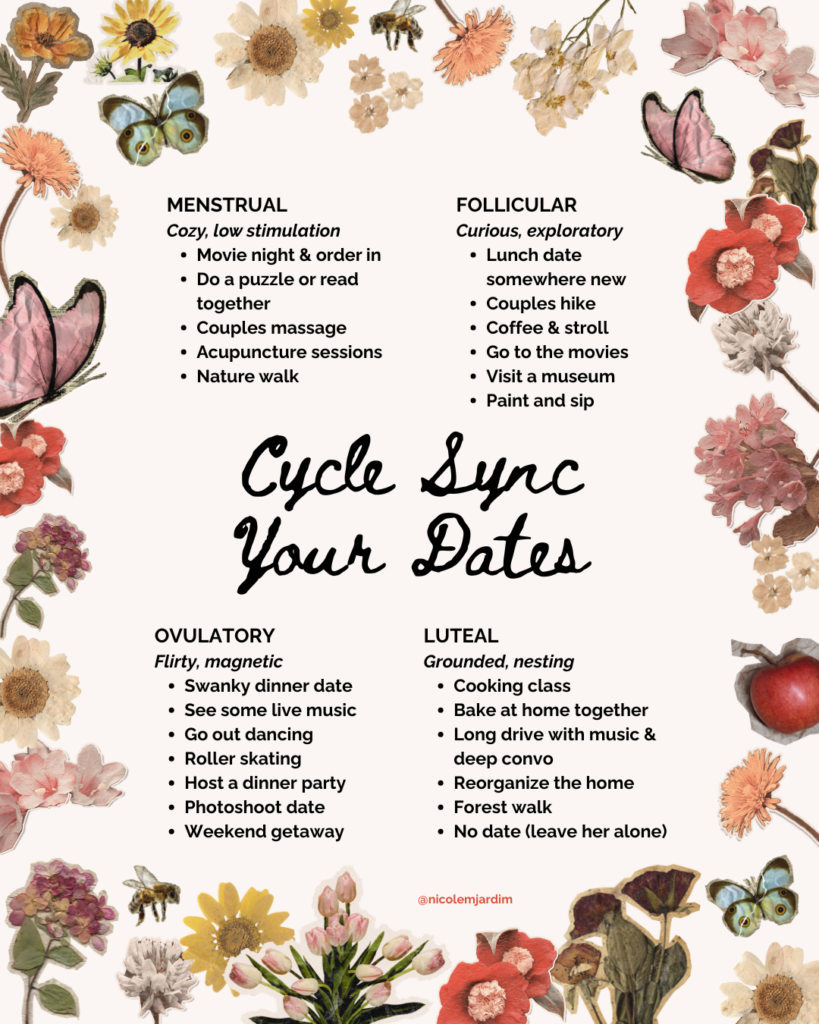
Phase 3: The Ovulatory Phase
Summer • Full Moon 🌕
Themes: fertility, energy, irresistability, seduction
Ovulation is the culmination of all the hard work your body has been doing over the last two weeks. This is the shortest phase but the peak of hormonal activity. Estrogen and testosterone support confidence, communication, focus, and libido. Many women feel magnetic, articulate, and socially engaged during this phase.
Food
Ovulation is energetically demanding. Support your body with complex carbohydrates like sweet potatoes, rice, quinoa, and starchy vegetables, along with hearty breakfasts that include eggs, vegetables, and healthy fats.
Estrogen peaks during this phase, so support liver detoxification with one to two daily servings of cruciferous vegetables like broccoli, cauliflower, cabbage, and kale.
Lifestyle and Career
This is your summer. Estrogen enhances memory and verbal fluency, making this an excellent time for presentations, interviews, networking, public speaking, and important conversations.
Motivation and confidence are high, so schedule tasks that require visibility, output, and leadership. Get out there and have fun with your man. Pain tolerance is also higher during ovulation, so this is a practical time for OBGYN or maxing appointments. 🙃
Exercise
High-impact and high-intensity workouts often feel great during ovulation. Weight lifting, running, plyometrics, and spinning are all well supported. Because estrogen increases joint laxity, make sure to warm up/stretch thoroughly and prioritize recovery to reduce injury risk.
Sex
You are naturally very lubricated at this time, and your sex drive is often the highest it will be in your cycle, so you may find yourself wanting more passionate and intense sex during this phase, without needing as much foreplay. Own it! 💃
Phase 4: The Luteal Phase
Autumn • Waning Moon 🌘
Themes: slowness, sensitivity, self-care, attention to detail
The early luteal phase may feel similar to ovulation, but as estrogen and testosterone decline and progesterone rises, energy often shifts. Progesterone supports calm and focus, but later in the phase PMS or PMDD symptoms may appear.
This is a time for honesty, reflection, and restoration.
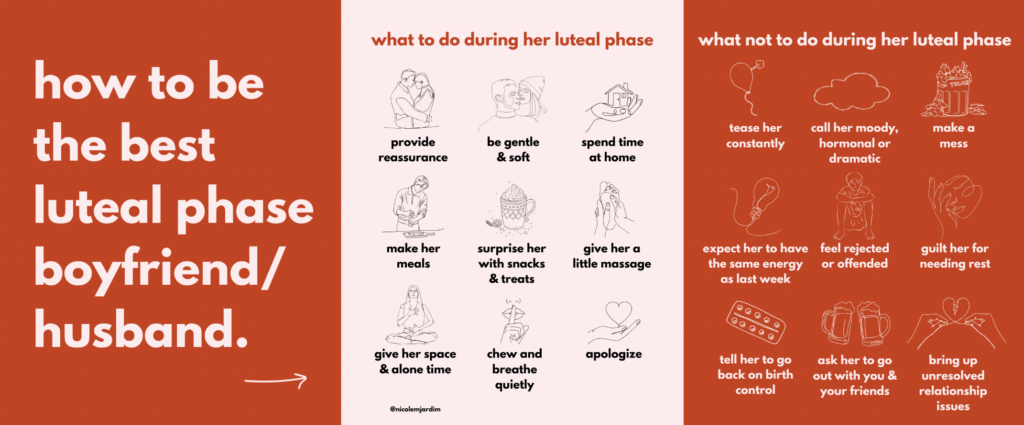
It’s also often the phase where women feel the most misunderstood. What can help during this time is reassurance, gentleness, fewer demands, and real nourishment–food, rest, touch, and time alone without guilt.
What doesn’t help is being labeled moody or hormonal, pressure to keep up with last week’s energy, being pushed socially, or having to carry the mental and physical load at home without support.
Food
Progesterone dominates in this phase, and it brings with it a higher chance of blood sugar crashes, which can worsen PMS symptoms. Focus on higher-protein, higher-fat meals with moderate carbohydrates.
Roasted root vegetables, high-protein snacks, nuts, seeds (especially sesame and sunflower), and to satisfy cravings dark chocolate (70% cacao or higher) which is high in magnesium and antioxidants.
Your partner should feed you during this time! Lol. Especially in the second half of the luteal phase. 🤗
Lifestyle and Career
Autumn is about refinement. This is a great phase for closing projects, organizing, bookkeeping, and preparing for the next cycle. Emotional clarity increases, and issues that were previously ignored may come into focus.
If strong emotions arise, pause and reflect rather than pushing them away. Prioritize rest, reduce stimulation, and ask for support where needed. 💕
Exercise
Early luteal: moderate to intense workouts may still feel good.
Late luteal: taper down. Walking, swimming, Pilates, Barre, stretching, or gentle yoga support recovery.
Sex
Oxytocin levels are lower in the second half of the cycle, and many women prefer less stimulation and more space. Desire may shift toward affection, cuddling, or solo pleasure. If engaging in partnered sex, longer foreplay and gentler pacing often feel best.
Why Cycle Awareness is a Gamechanger
Mapping your menstrual cycle and aligning your life with its phases allows you to anticipate how you’ll feel and, subsequently, make a plan for how best to support your body each month. By paying attention to what you’re experiencing during each phase of your cycle—what you most want to eat, your mood, the types of exercise that satisfy you, the intimacy you’re craving (or not)—and working with your cycle instead of fighting against it, you’ll promote healthy hormone balance and harness your innate lady superpowers so you can slay life.
If this resonates, consider sharing it with your partner as a way to say:
“This is how I generally experience my cycle, and how you can best support me.”
Looking for deeper support? Join the Fix Your Period Collective (7-days free), your one-stop-shop for fixing period problems for good. Your first step is the Period Quiz.