Progesterone vs. Progestin:
Progesterone is a key female sex hormone that is produced by the ovary after ovulation.
Progestin is a synthetic version of the naturally occurring hormone progesterone.
Progestins interact with progesterone receptors in the body in order to cause progesterone-like effects. These include changing the uterine lining and thickening cervical fluid (so sperm can’t get through).
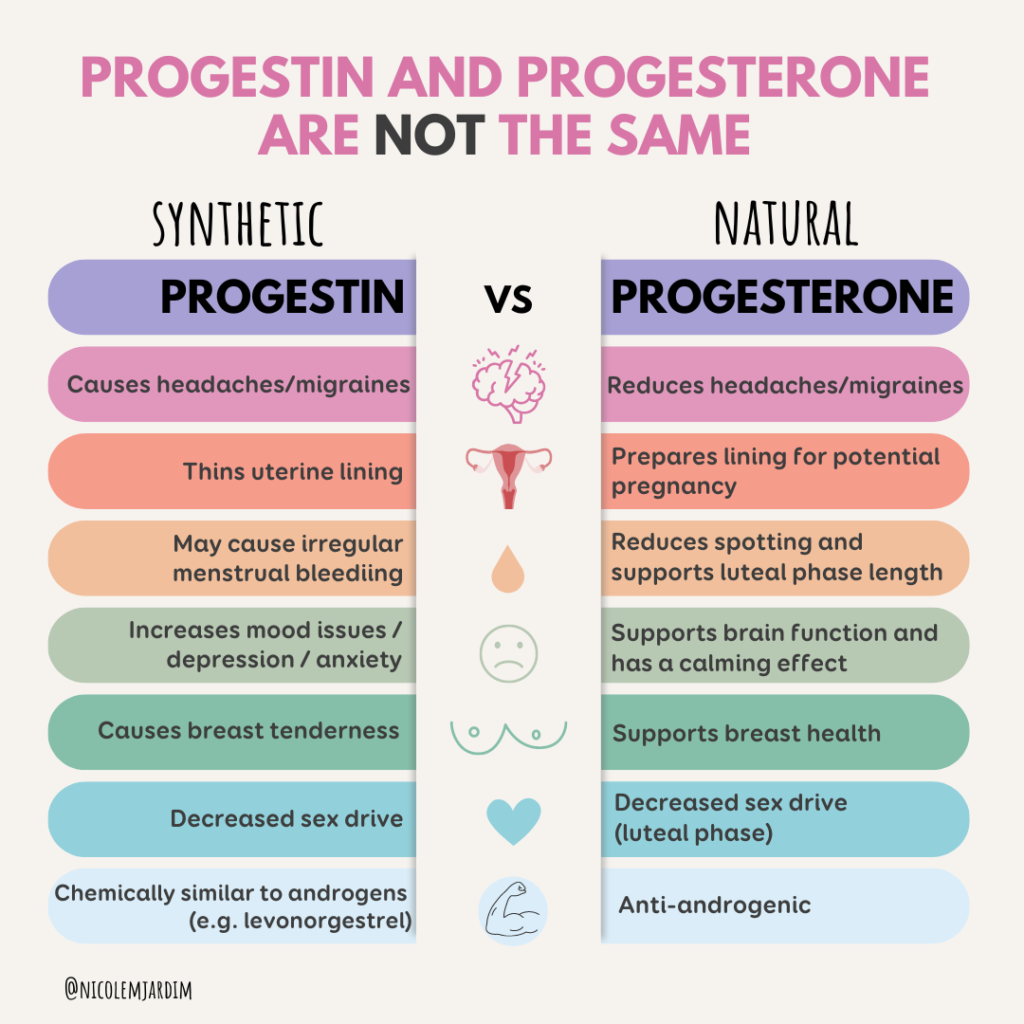
Progesterone and progestin are NOT the same and impact your health very differently.
What progestin and progesterone DO have in common:
- They both thicken cervical mucus (preventing sperm from making their way into your uterus)
- They both tend to decrease sex drive (in a natural cycle, estrogen and testosterone do the opposite by the way)
Things that progestin and progesterone DON’T have in common:
1. Uterine lining: While both change the uterine lining (endometrium) they do so in different ways: Progestin thins out the lining dramatically so that an embryo can’t successfully implant. This is also why many women stop getting a period on hormonal bc or have lighter periods or issues with spotting. Whereas progesterone, on the other hand, helps to prepare the lining for pregnancy.
2. Migraines and headaches are a huge issue with progestin. Whereas progesterone has a protective effect on the brain and reduces inflammation.
3. Speaking of the brain, studies show that many progestins are linked to anxiety and an increased risk of depression and suicide. Progesterone on the other hand has a calming effect on the brain and supports a healthy mood.
4. Breast health: breast tenderness and even risk of breast cancer goes up with progestin use. Whereas progesterone supports breast health.
5. Progestins, like Levonorgestrel, are actually chemically similar to androgen hormones (like testosterone), whereas progesterone has an anti-androgenic effect. More on this below.
What about the different types of progestins?
There are so many! How do they differ?
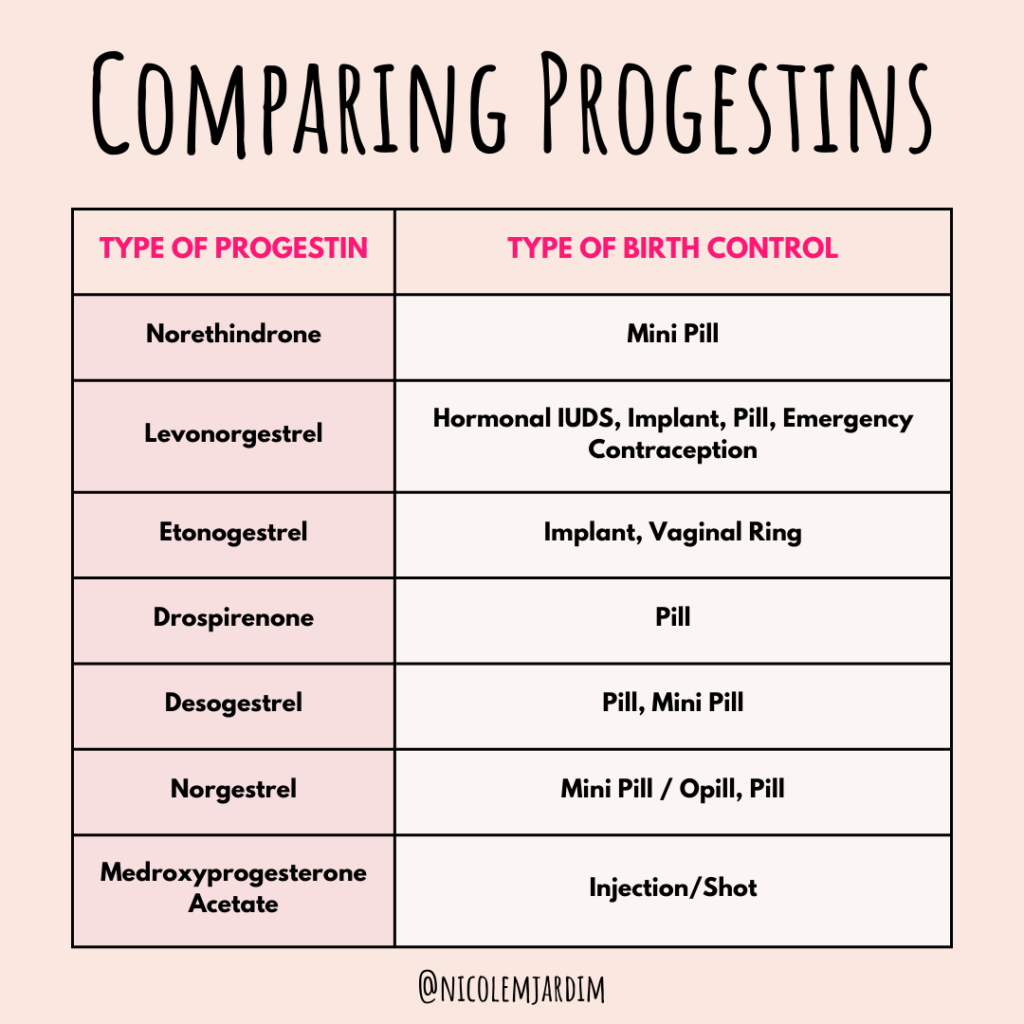
Progestins have the same mechanisms of action: thickening cervical fluid, and generally suppressing ovulation (though with some types / for some individuals you may continue to ovulate).
As mentioned, many progestins thin the uterine lining (which is why your period may disappear while using them).
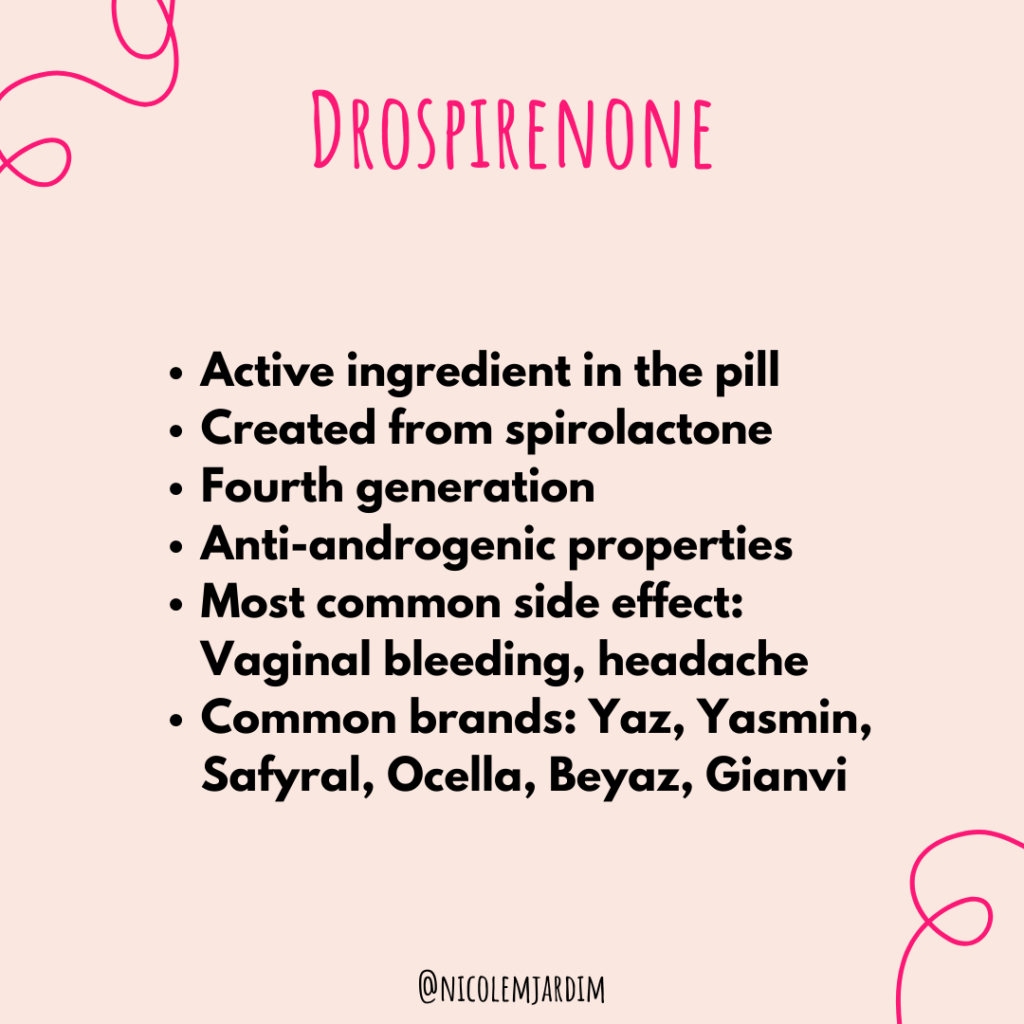
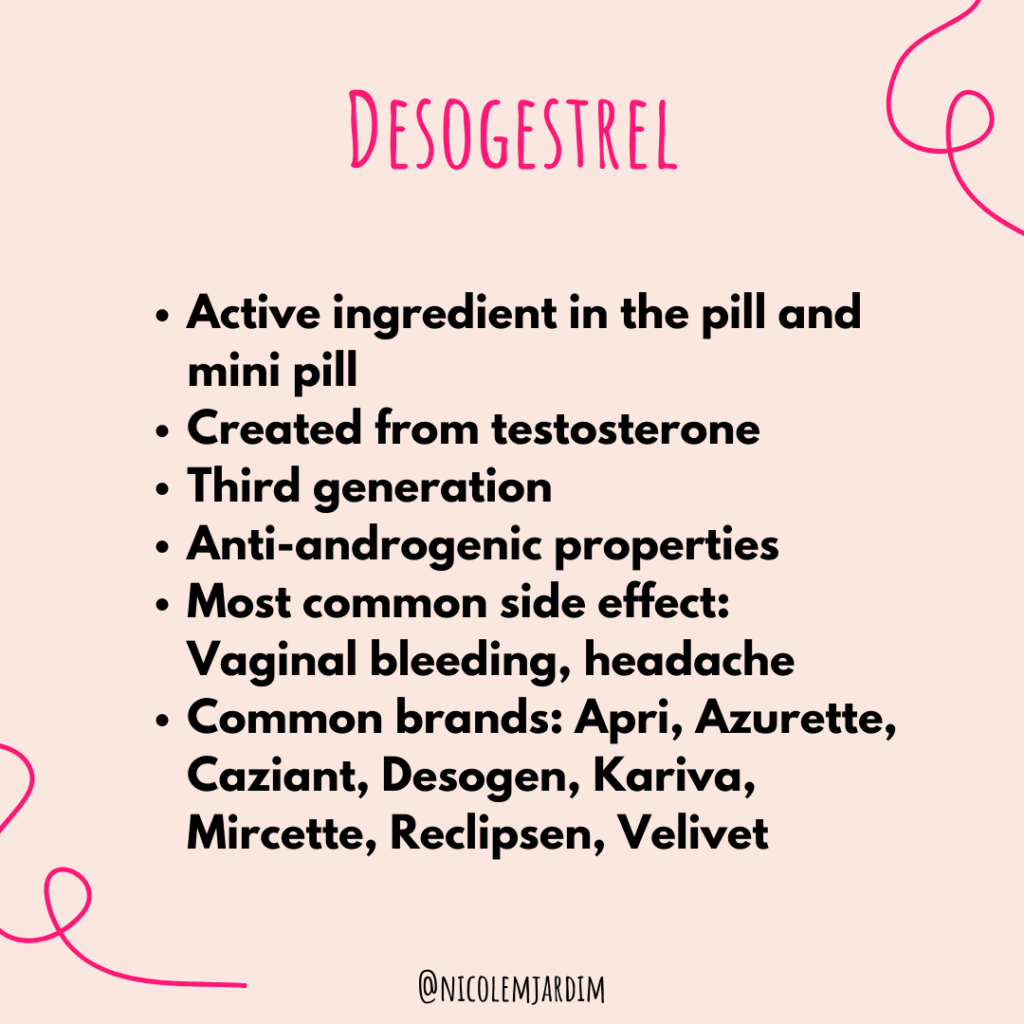
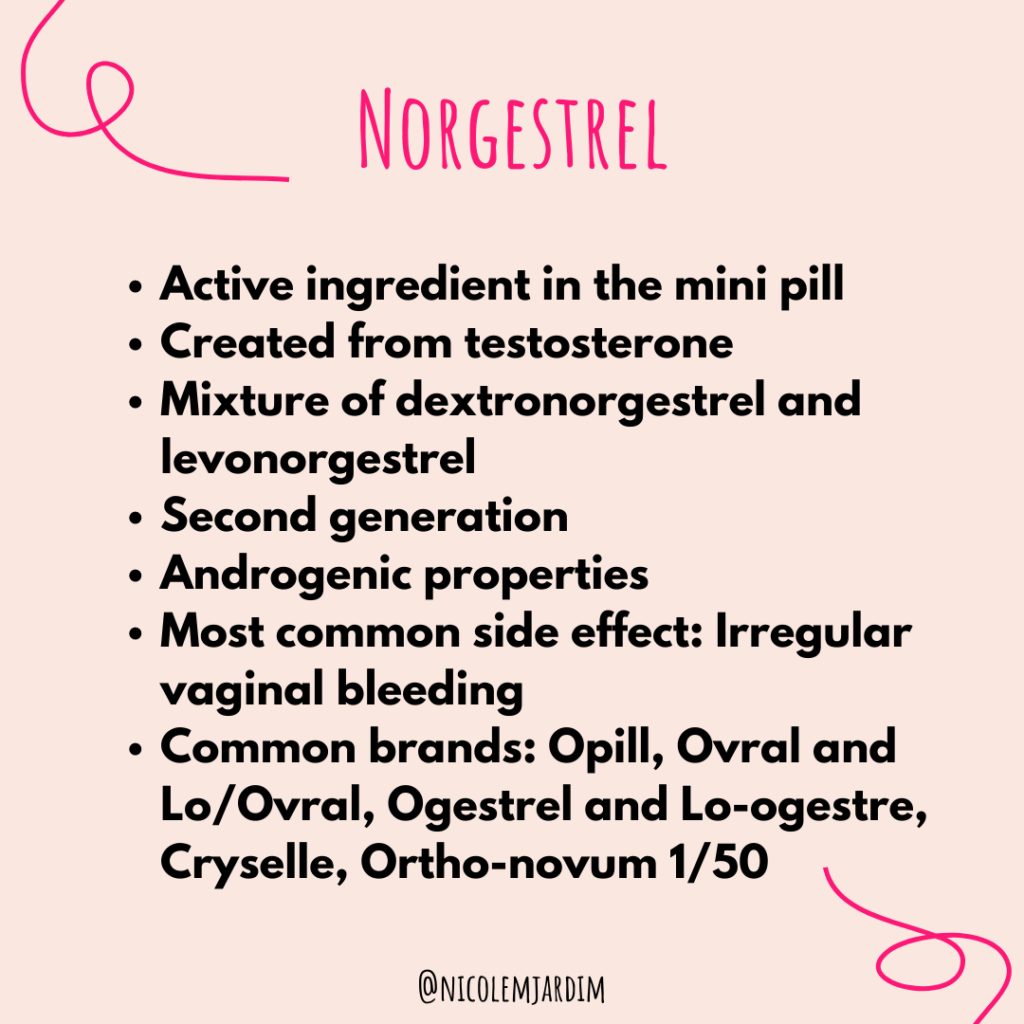
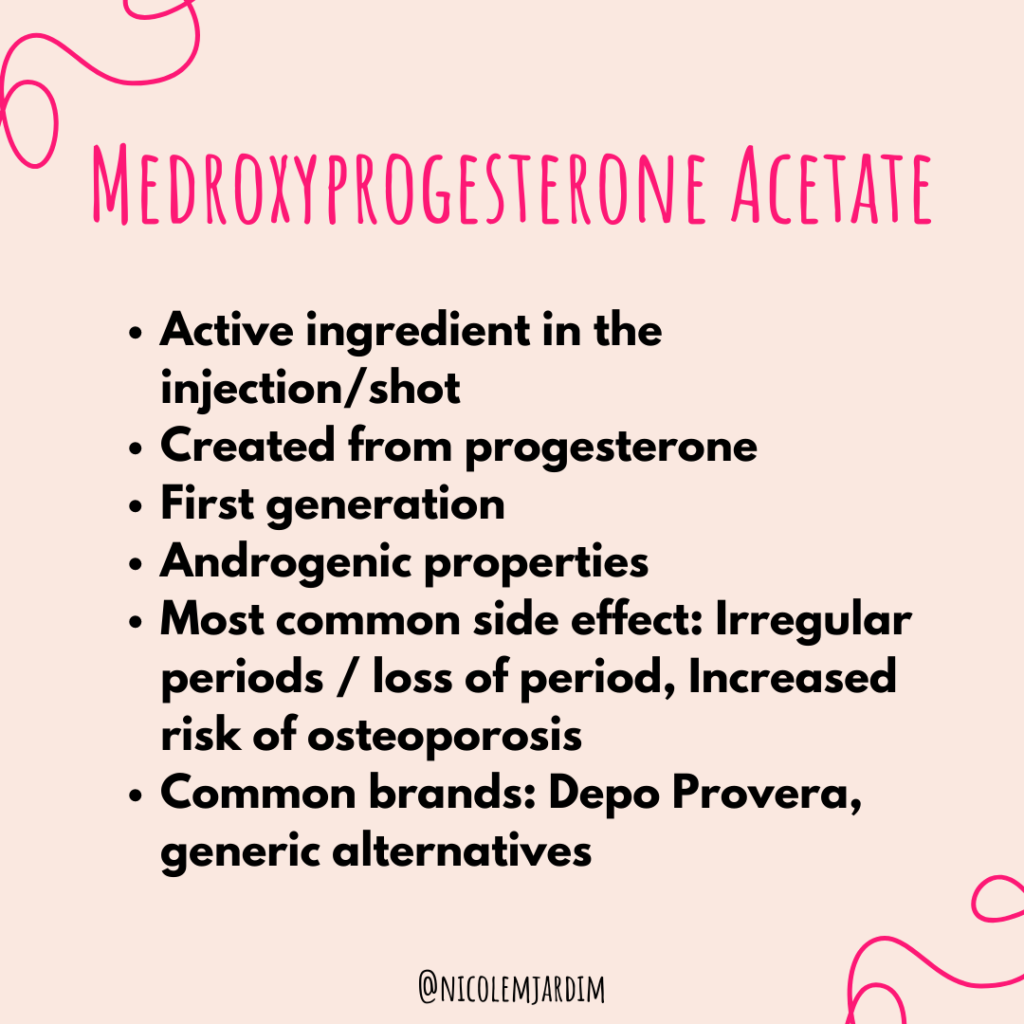
Most progestins are created in a lab from testosterone (yes, you read that right), a few from progesterone, and one from spirolactone.
Because of this, many progestins will have an androgenic effect on your body (think, weight gain, acne, excess hair growth… fun!), while a few will have anti-androgenic effects. No one type affects everyone the same though.
Progestins also differ depending on their “generation”.
There are four generations that are based on the molecules they were derived from and when they first appeared on the market. Newer doesn’t necessarily mean better. You can learn more about this in Sarah E. Hill’s book This Is Your Brain On Birth Control.
The synthetic estrogen in combined oral contraceptive pills helps to keep bleeding “regular” (not a real period, a withdrawal bleed, but still). That’s why with the progestin only methods, irregular bleeding / spotting is a common complaint.
What about side effects?
There are MANY side effects associated with progestins ranging from headaches to increased cancer risk. Some come with a higher blood clot risk than others. I strongly encourage you to read the insert for your birth control method to learn about all of the side effects. You’ll find the inserts on the drug manufacturer’s websites.
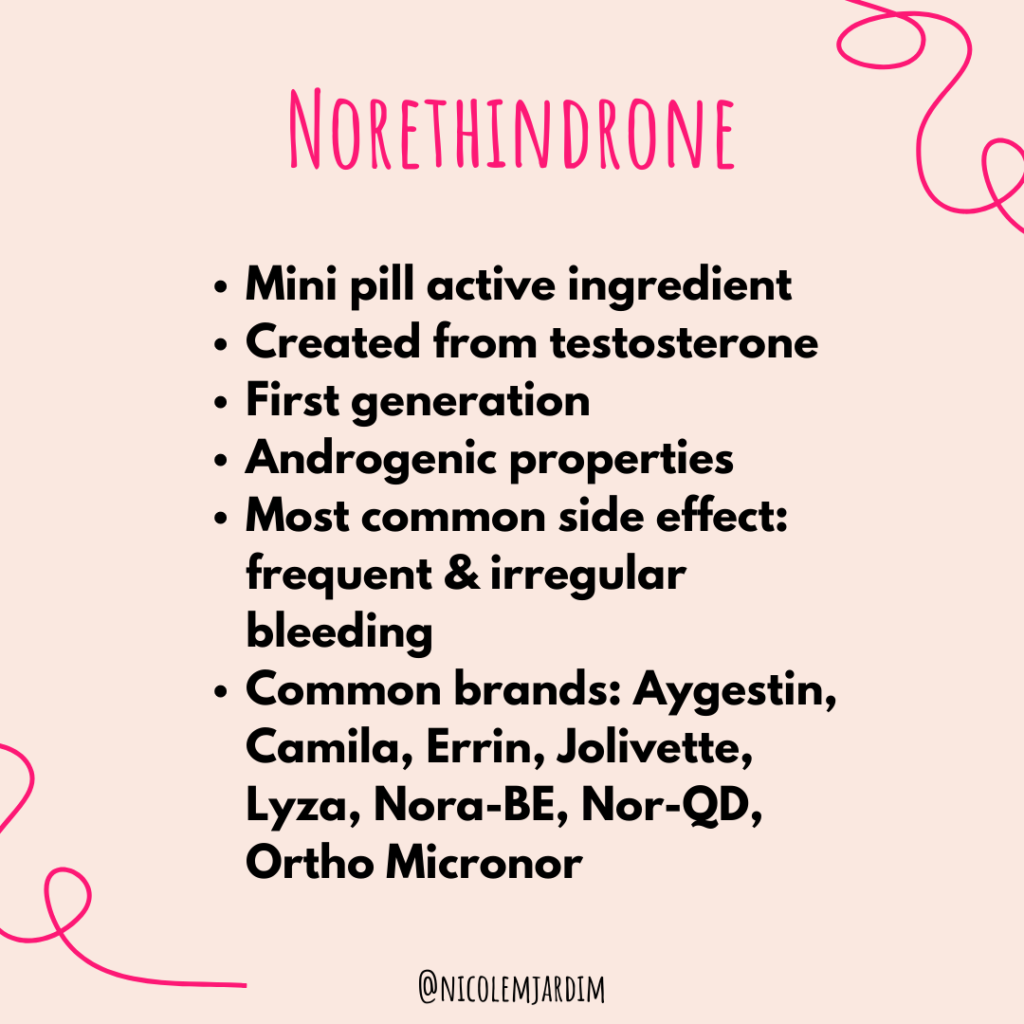
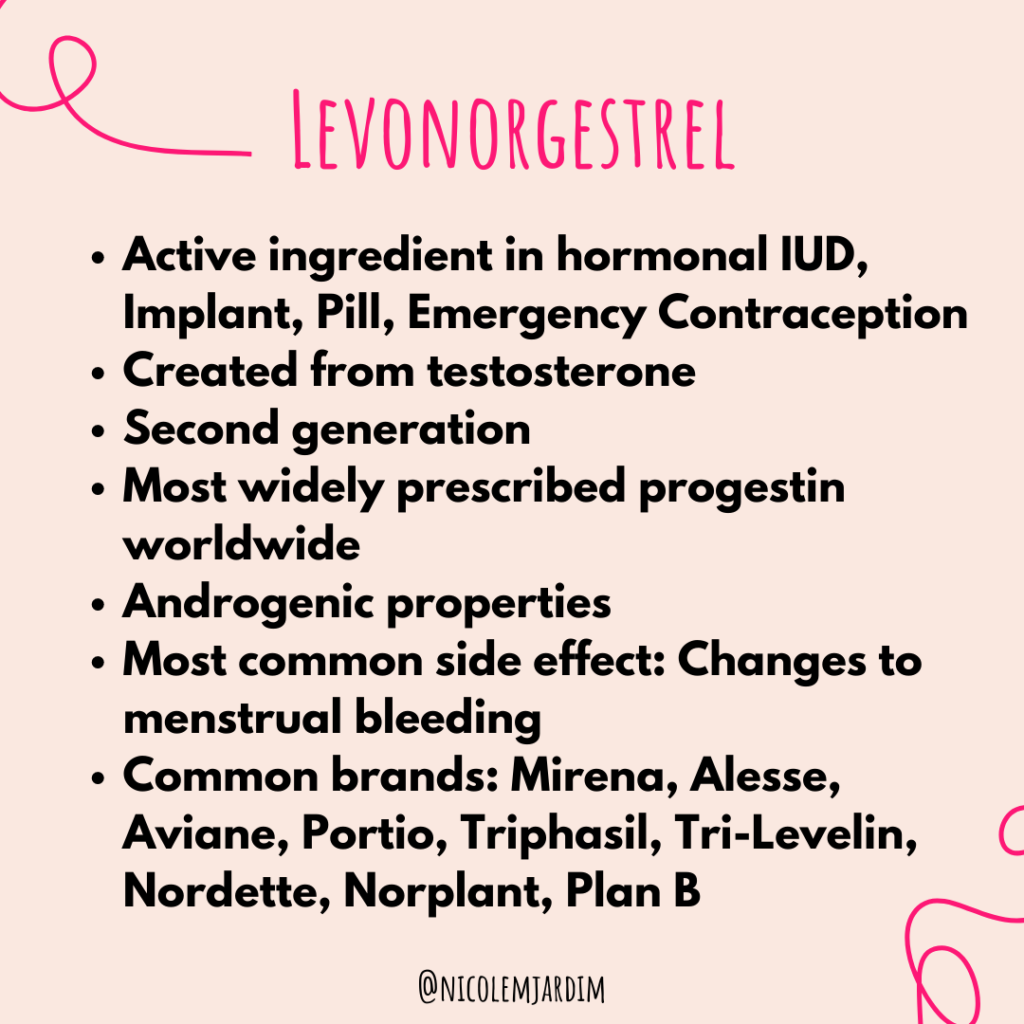
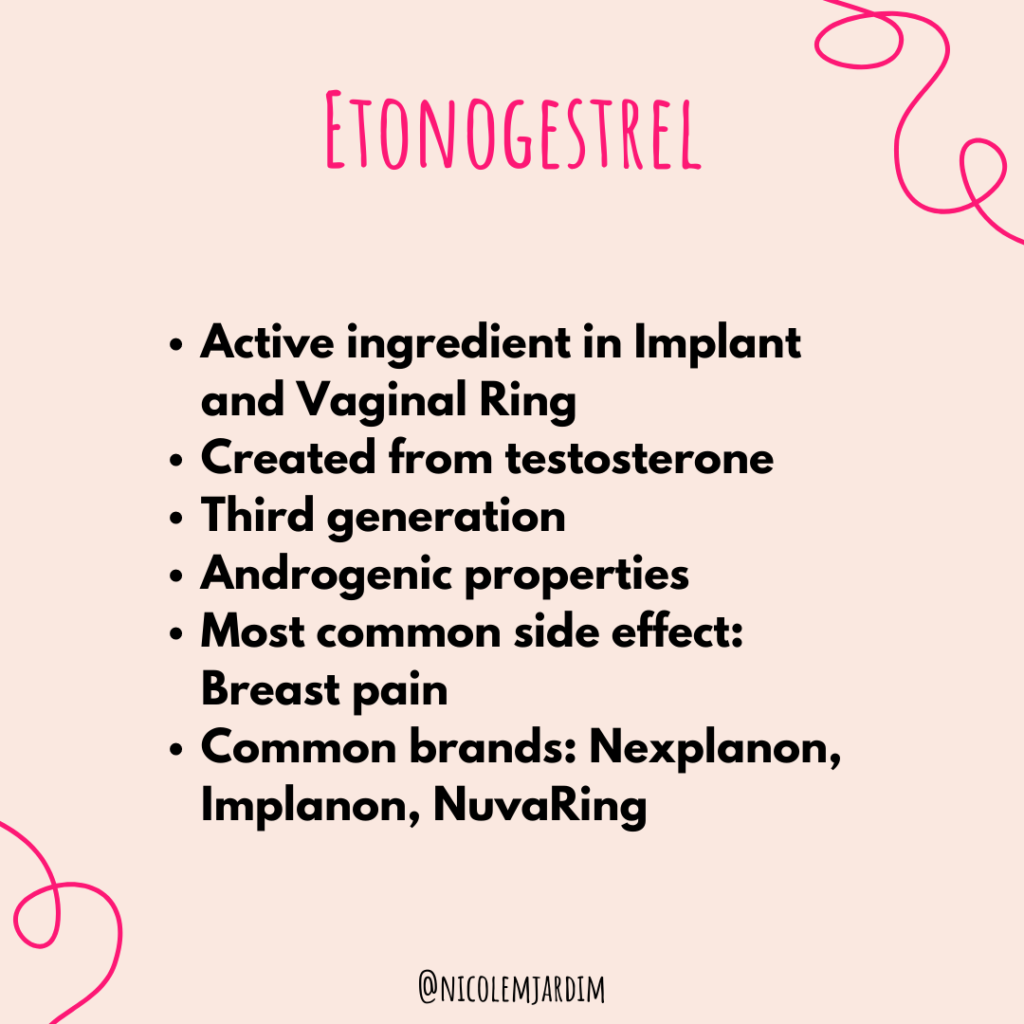
The following slides provide further information on a few of the popular forms of progestin available as of today:
What to do next…
- If you are experiencing issues with a progestin-based birth control, it’s important to talk to your doctor about alternatives.
- Read my book Fix Your Period if you are using a progestin-based birth control to help improve period-related symptoms you’re experiencing. I’m all about finding the root cause of your period problems and you’ll find tons of solutions in my book.
- Take the Period Quiz. It’ll help you understand which systems are driving your symptoms, and what to focus on first.
- Join the Fix Your Period Collective. This is where we take everything you’re learning and actually apply it – with education, tools, and support that meet you where you are.